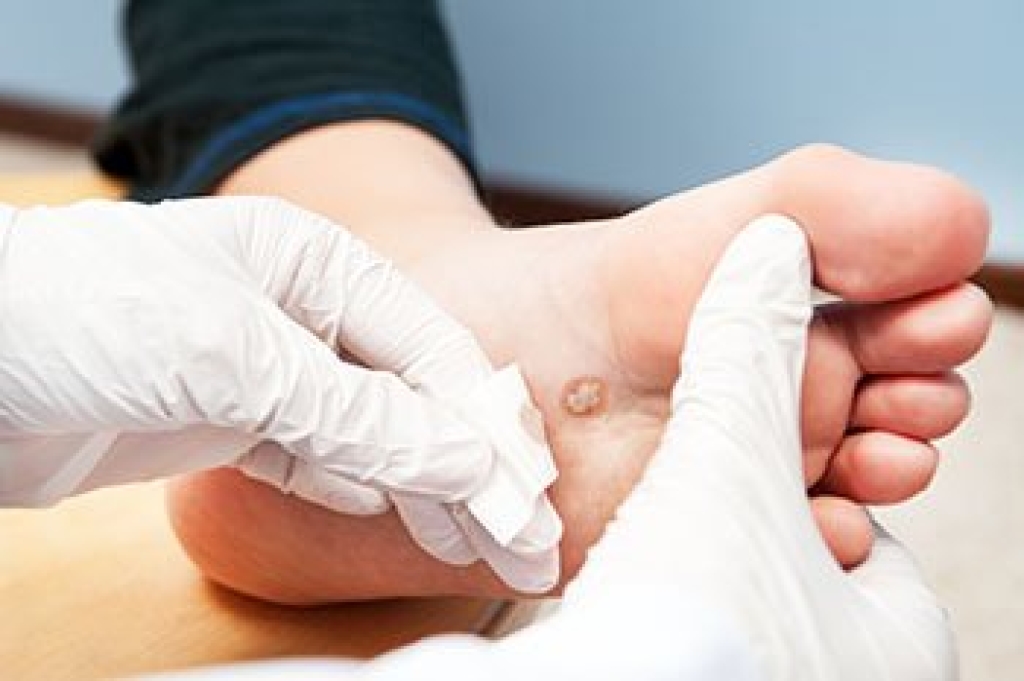
Plantar warts are small growths that develop on the soles of the feet after a virus enters the skin. The virus is called human papillomavirus, or HPV. These warts frequently appear on the heels or balls of the feet, where body weight pushes against them. A wart may look like a rough patch of thickened skin with tiny dark dots inside. Those dots are small blood vessels, not dirt. Pressure can push the growth inward, making it painful while walking or standing. Some people develop several warts close together, forming a larger patch. Plantar warts are usually harmless, but discomfort can interfere with work, exercise, and everyday movement.
The virus spreads through direct skin contact and surfaces contaminated with HPV. Shared showers, swimming pool areas, and locker rooms can increase exposure, especially when people walk barefoot. Small breaks in the skin give the virus a way to enter. Children and teenagers develop plantar warts more frequently than many adults. People with weakened immune systems may have more difficulty clearing the infection. A plantar wart can resemble a corn or callus, which makes identification important. Unlike a callus, a wart may interrupt the natural lines of the skin. Warts can also spread to nearby areas of the foot. Although some disappear without treatment, others remain painful or persist for a long period.
A podiatrist can examine the growth and determine whether it is a plantar wart or another skin problem. The podiatrist may carefully remove some thickened surface skin to examine the area more closely. Treatment options include prescription-strength products containing salicylic acid, which gradually remove affected skin. Freezing treatment is another option, although it can cause pain and does not work reliably for every plantar wart. A podiatrist can explain the benefits and limits of each approach and monitor the response. Patients with diabetes or reduced feeling in their feet need particular care when treating skin growths. If you have developed a plantar wart, it is suggested that you schedule an appointment with a podiatrist for effective relief and treatment solutions.
Plantar warts can be very uncomfortable. If you need your feet checked, contact Kentston Cripe, DPM from Roseville Foot & Ankle. Our doctor will assist you with all of your foot and ankle needs.
About Plantar Warts
Plantar warts are the result of HPV, or human papillomavirus, getting into open wounds on the feet. They are mostly found on the heels or balls of the feet.
While plantar warts are generally harmless, those experiencing excessive pain or those suffering from diabetes or a compromised immune system require immediate medical care. Plantar warts are easily diagnosed, usually through scraping off a bit of rough skin or by getting a biopsy.
Symptoms
- Lesions on the bottom of your feet, usually rough and grainy
- Hard or thick callused spots
- Wart seeds, which are small clotted blood vessels that look like little black spots
- Pain, discomfort, or tenderness of your feet when walking or standing
Treatment
- Freezing
- Electric tool removal
- Laser Treatment
- Topical Creams (prescription only)
- Over-the-counter medications
To help prevent developing plantar warts, avoid walking barefoot over abrasive surfaces that can cause cuts or wounds for HPV to get into. Avoiding direct contact with other warts, as well as not picking or rubbing existing warts, can help prevent the further spread of plantar warts. However, if you think you have developed plantar warts, speak to your podiatrist. He or she can diagnose the warts on your feet and recommend the appropriate treatment options.
If you have any questions, please feel free to contact our office located in Roseville, CA . We offer the newest diagnostic and treatment technologies for all your foot care needs.
