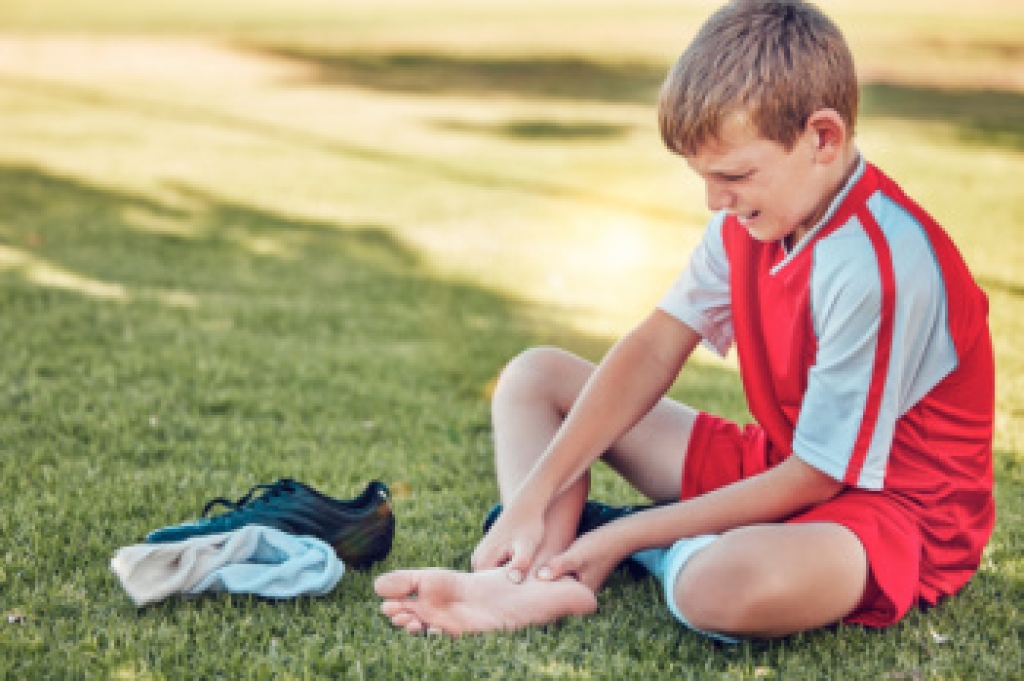
A sprained ankle is a common injury in children, especially those who participate in sports and other physical activities. An ankle sprain happens when the strong bands of tissue that support the joint are stretched or torn. This often occurs when the foot twists or rolls unexpectedly. Children may sprain an ankle while running, jumping, or changing direction quickly. Common symptoms include pain, swelling, and bruising around the ankle. A child may also have trouble walking or putting weight on the injured foot. Because fractures can cause similar symptoms, a professional evaluation may be needed to identify the injury correctly.
Ankle sprains can range from mild stretching of the supporting tissues to more serious tears. The amount of pain does not always show how severe the injury is. Children also have areas of developing bone called growth plates, which can be injured and sometimes mistaken for a sprain. For this reason, ongoing pain or difficulty bearing weight should be carefully evaluated. A significant ankle injury may also affect joint stability and movement. Returning to normal activity before the ankle has properly healed may increase the chance of another injury. An accurate diagnosis can help guide treatment and support a safe recovery.
A podiatrist can examine a child’s sprained ankle and determine whether the injury involves the supporting tissues, bones, or growth plate. The evaluation may include checking swelling, tenderness, and ankle stability. Imaging may be recommended when a fracture or growth-plate injury is suspected. Podiatric treatment depends on the severity of the injury and can focus on protecting the ankle, restoring movement, and supporting proper healing. Follow-up care can also help determine when returning to sports or other activities is appropriate. If your child has persistent ankle pain, swelling, or difficulty walking after an injury, it is suggested that you consult a podiatrist for an evaluation and appropriate treatment options.
The health of a child’s feet is vital to their overall well-being. If you have any questions regarding foot health, contact Kentston Cripe, DPM of Roseville Foot & Ankle. Our doctor can provide the care you need to keep you pain-free and on your feet.
Tips for Keeping Children's Feet Healthy
- Make sure their shoes fit properly
- Look for any signs of in-toeing or out-toeing
- Check to see if they have Clubfoot (condition that affects your child’s foot and ankle, twisting the heel and toes inward) which is one of the most common nonmajor birth defects.
- Lightly cover your baby’s feet (Tight covers may keep your baby from moving their feet freely, and could prevent normal development)
- Allow your toddler to go shoeless (Shoes can be restricting for a young child’s foot)
- Cut toenails straight across to avoid ingrown toenails
- Keep your child’s foot clean and dry
- Cover cuts and scrapes. Wash any scratches with soap and water and cover them with a bandage until they’ve healed.
If you have any questions, please feel free to contact our office located in Roseville, CA . We offer the newest diagnostic and treatment technologies for all your foot care needs.
